The Laurel, Japan's first domestically manufactured wristwatch, was completed in 1913. It was an important milestone for not just Seiko but for the entire nation’s timepiece industry. Now, two newly developed products drawing on elements of the Laurel's design have made their debut within the Presage collection. One combines an Arabic-numeral index and an enameled dial surface inspired by the Laurel's design aesthetics, bringing two features of the Laurel’s design to the regular collection for the first time. Let's explore the thinking and craftsmanship behind these new timepieces.
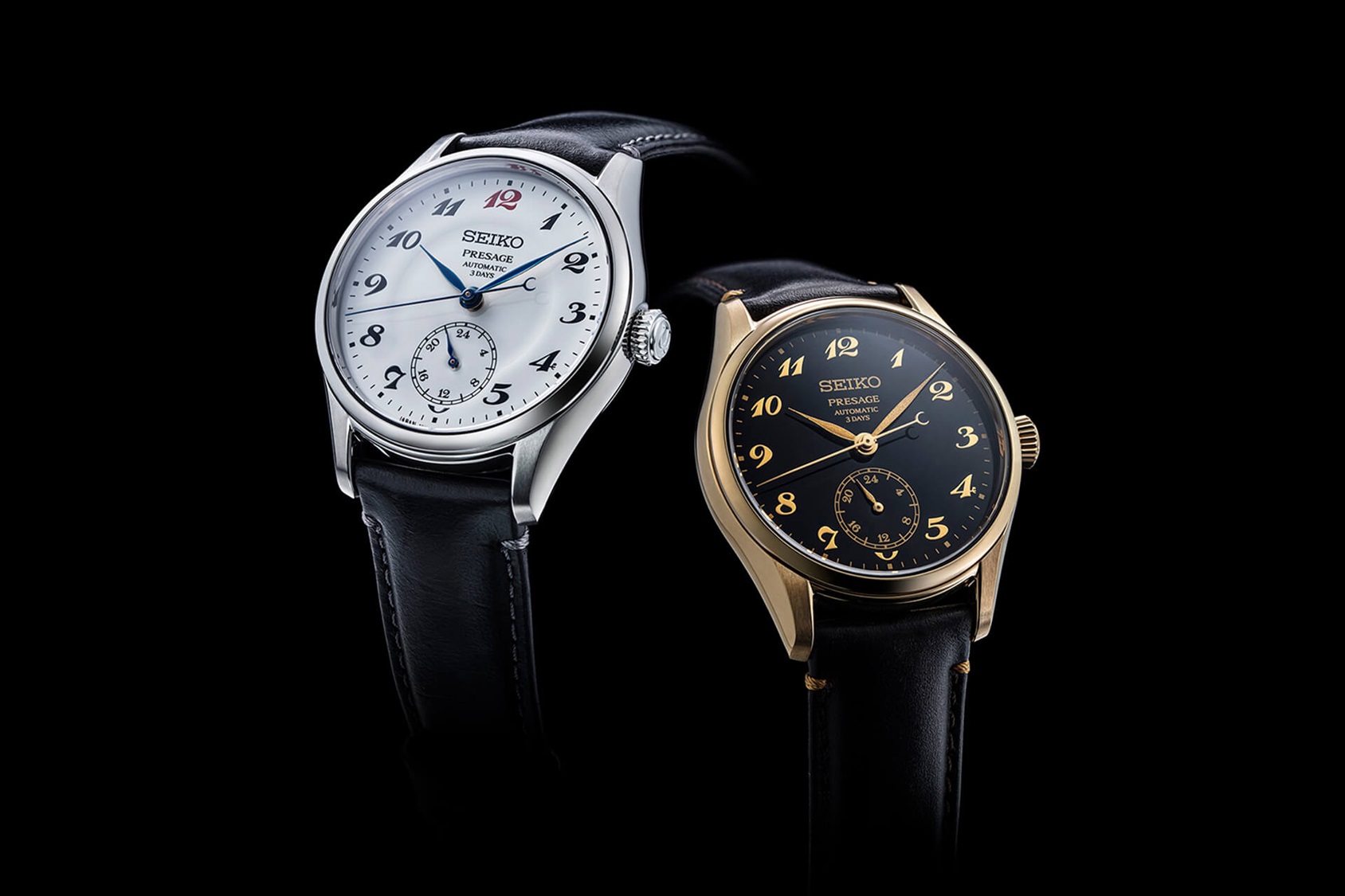
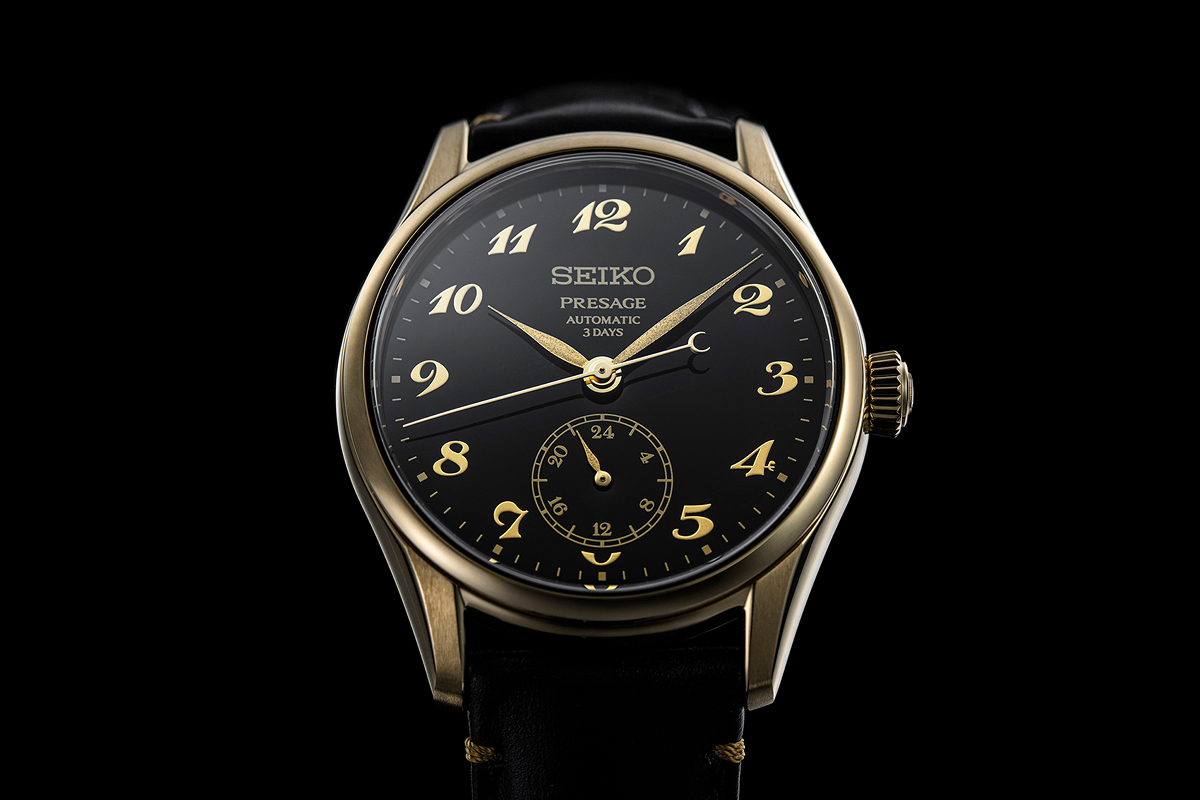
The Seiko Presage HCC005 (left), which uses an enamel dial, and the HCC006 (right), which has an urushi lacquer dial. Both use Arabic numerals modeled after those seen on the Laurel, with creative approaches that are both clever and alluring.
Photograph by Yu Mitamura
Text by Masaharu Nabata
Special Homage Models Become Regular Offerings: The Laurel as the Starting Point for Seiko Wristwatches
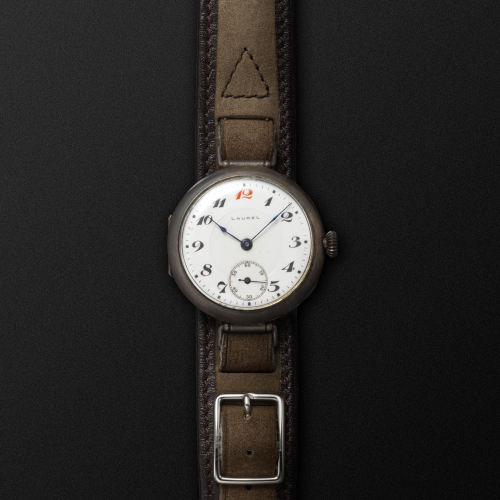
Seiko wristwatches trace their lineage back to a model that occupies an undeniable place in Japan's timepiece manufacturing history. That model was the Laurel, completed in 1913 as the nation's first domestically manufactured wristwatch..
The Laurel, completed in 1913, was Japan's first domestically manufactured wristwatch. It was created using a movement normally installed in compact pocket watches and similar products.
The size was 12 lignes, meaning it had a small movement—around 27 millimeters in diameter—in a case of approximately 30 millimeters. This was significantly smaller than the pocket watches that had come before, making it difficult to manufacture: the maximum output was just 30 to 50 units a day.
The Laurel's significance extended beyond its simple integration of a small movement to realize a compact watch. In 1910, Seiko succeeded in the first-ever domestic manufacturing of its own hairspring; in 1913, it successfully fabricated the model’s enamel dial face. Because these were both part of the Laurel, the model embodies two of Seiko's significant contributions to the history of timepieces.
Now, two models designed as homages to the Laurel have been welcomed into the Seiko Presage collection as regular products. What motivated Seiko to make this move?
According to the designers tasked with developing products for the Presage collection, they felt that the Laurel, which represents the origins of wristwatch design for the company, should serve as the inspiration not for limited-run products but instead for regular series models, allowing as many people as possible to experience the appeal of its distinctive design. Those same designers also hoped that conveying Seiko's watchmaking history through the new models would communicate the fascinating aspects of the company's watchmaking approaches to a wider audience.
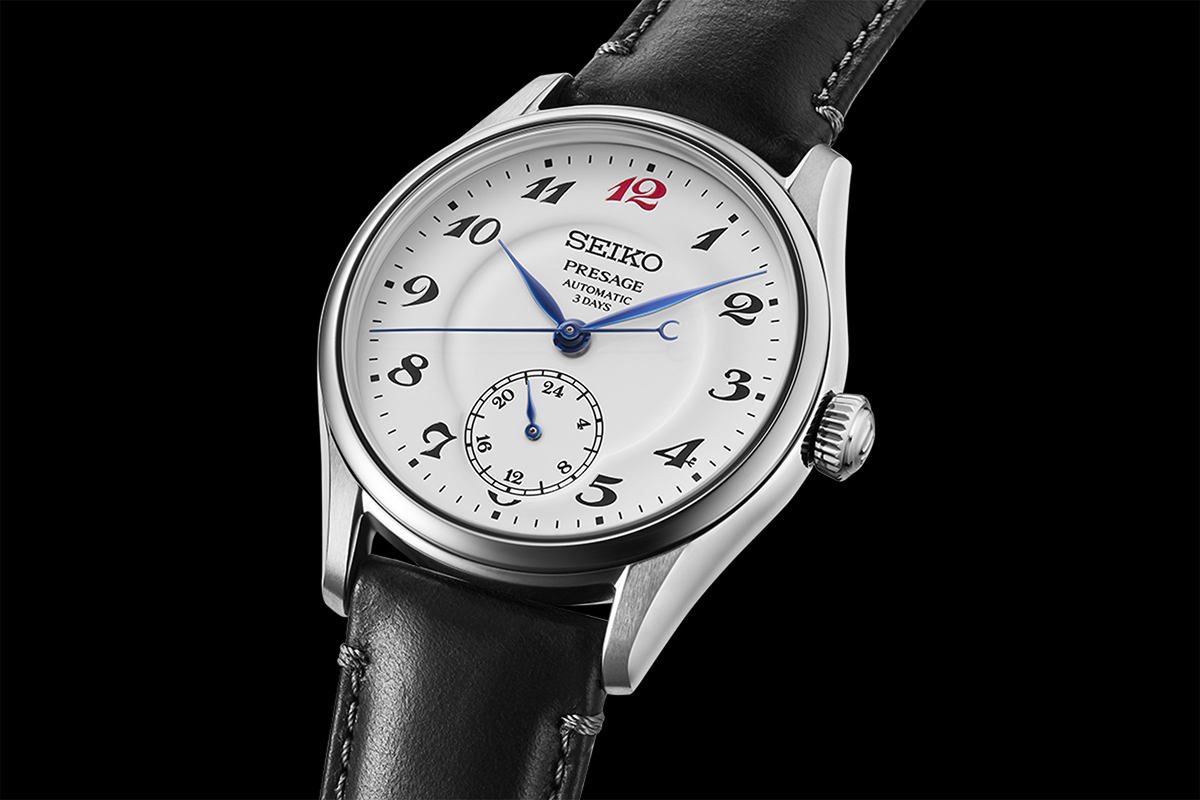
Seiko Presage HCC005
The new HCC005 uses an enameled dial fabricated at a specialized plant in Japan. The Laurel models released in 1913 came in two different Arabic-numeral index designs: one with all black numerals and one that adopted red coloring for the 12 o'clock mark only. This latest release adopts that same iconic red index accent. Specifications: automatic winding (Cal. 6R5H), 24 jewels, 21,600 VPH, approximately 72 hours power reserve, stainless steel case (39.6 mm diameter, 12.4 mm thickness), 3 atm water resistance, scheduled for September 2026 release.
One well-executed aspect of the Laurel's red 12 o'clock numeral is its use of a darker tone to facilitate better pairing with the overall dial face color.
With an enamel dial, each dial is individually sintered at a high temperature, so each piece develops its own subtly distinctive character depending on how it emerges from the firing process. No two are exactly the same, making each watch special in its own way.
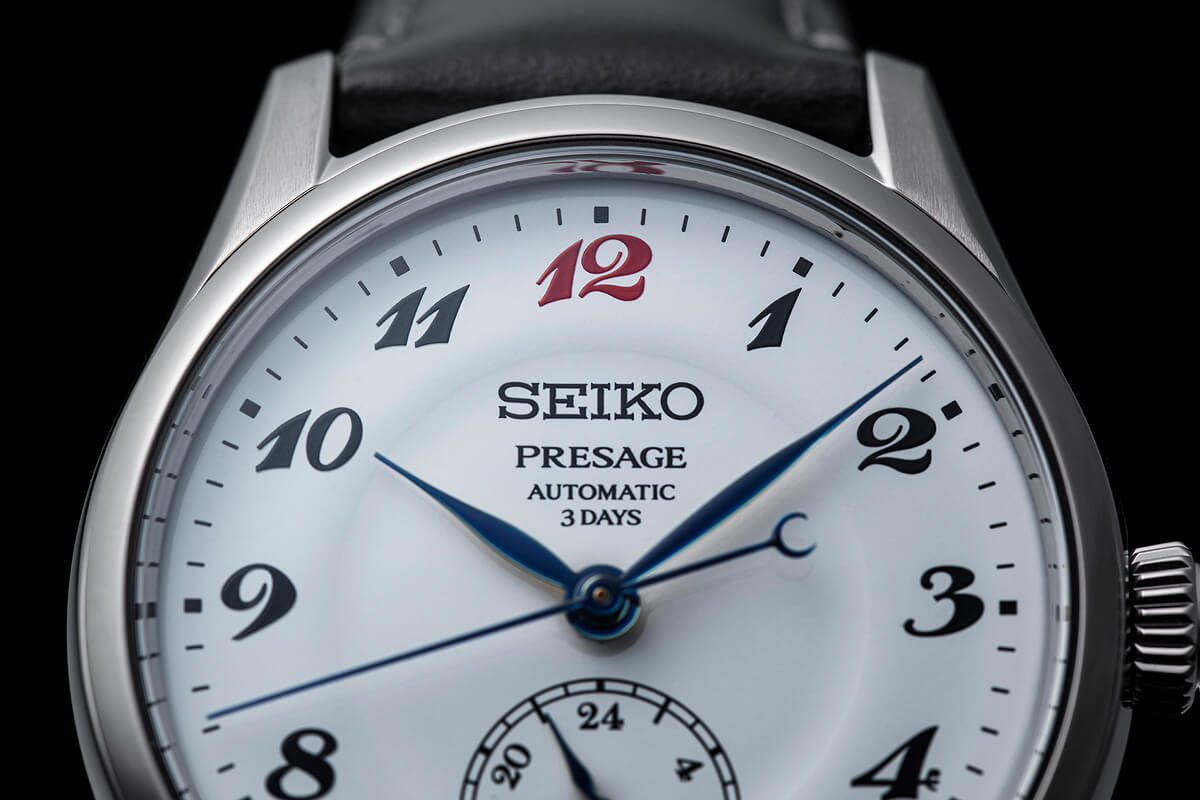
The enameled dial is characterized by a creamy, mellow sheen. That softness comes from the enamel layer itself. Both cloisonné ware and enamelware use a vitreous glaze fired at a high temperature of around 850 degrees Celsius (1562 degrees Fahrenheit) to adhere it to a metal plate. However, enamelware is used in practical product applications, whereas cloisonné pieces are generally for fine arts
Striking Expression Using Urushi Lacquer: A Key Facet of Japanese Traditional Crafts
Aside from enamel, some Seiko Presage models feature other traditional Japanese craft materials, such as urushi lacquer and Arita ware, for their dials. Joining the enamel version in the Presage lineup is another new model using a black urushi lacquer dial. The contrast between the white enamel model and black urushi lacquer model is striking—another reason to take a look at these alluring newcomers.
The design language of both the enamel and urushi lacquer models is consistent with the Laurel, their original inspiration, but the designers used different techniques for rendering their Arabic-numeral indexes in order to harness the characteristics of the dial materials. The enamel dial uses black markers to bring out the white coloring of the backdrop, while the urushi lacquer dial uses gold-colored markers and numerals to emphasize the black background.
And it goes without saying that designers employed a variety of clever techniques and ideas to maximize the appeal of each variant in its own way.
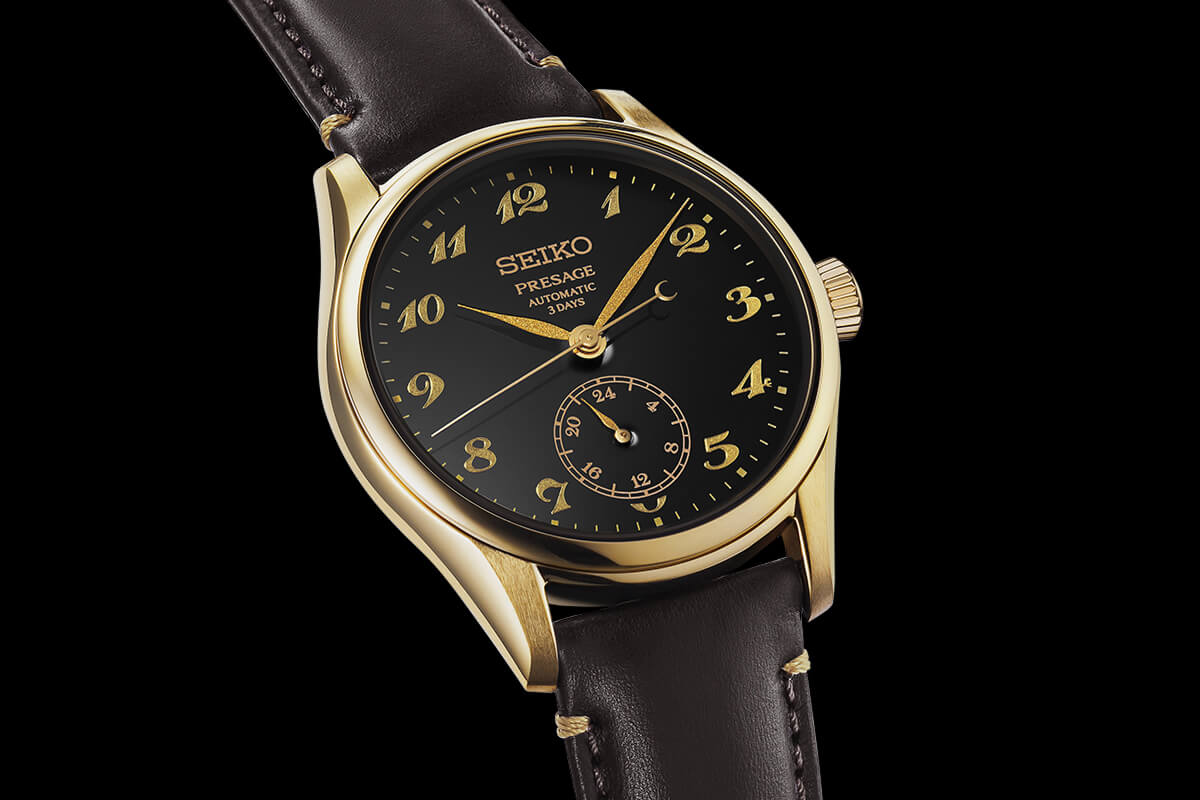
Seiko Presage HCC006
The HCC006 was developed under the direction of Isshu Tamura, a leading name in Kanazawa Maki-e gold lacquering. For the index markings and hands, the watch features delicately applied gold coloring that maintains expressive prominence atop the black urushi lacquer backdrop while retaining a subdued elegance. Specifications: automatic winding (Cal. 6R5H), 24 jewels, 21,600 VPH, approximately 72 hours power reserve, stainless steel case (39.6 mm diameter, 12.4 mm thickness), 3 atm water resistance, scheduled for September 2026 release.
The designers put meticulous care into the index atop the urushi lacquer dial. With an enamel surface, the thickness of the application layer can be leveraged to make the markings stand out in three-dimensional fashion. In the case of urushi lacquer, however, they tend to lose their prominence against the deep and lustrous black of urushi lacquer. The designers rectified this by affixing metal-plate elements atop the urushi lacquer base to impart golden luster. Rather than simply making it glitter, the aim was to create a quiet radiance that emerges from a matte finish, which proved to be a great challenge.
Similar to the index markings, the hands also appeared too subdued against the urushi lacquer dial at first, and using a matte finish would have made the surface too grainy and thus detract from the metal texture. Therefore, the designers gave the central pipe section a reflective, mirrored finish and created the hands with gold coloring to impart texture variations while preventing these elements from blending into the dark background.
The Seiko Presage collection actually began using urushi lacquer dials around 2013, and component quality has improved year by year. The latest black urushi lacquer dials have a rich, mellow luster that makes for stunning beauty.
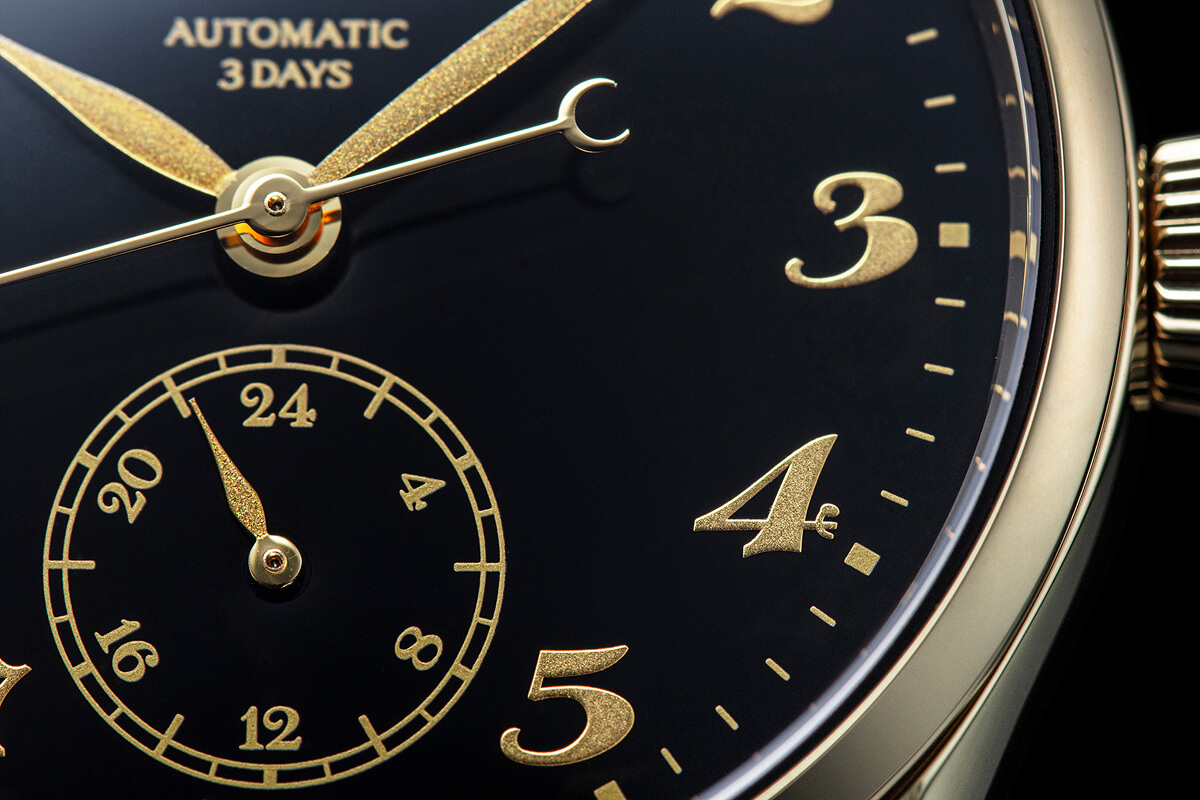
Seiko Presage HCC006
The black urushi lacquer dial of the Seiko Presage HCC006 adopts indexes with elegant Arabic numerals, echoing the Laurel's original design. However, the developers faced different challenges with the urushi lacquer variant than with the enamel-dialed HCC005, and the steps they took to surmount those challenges resulted in a truly exquisite new dial design. Note how the pipe (at the base of the hands) and second hand have different color finishes from the other hands, the index markers, and the railway track. Another small but interesting detail is the singular form of the Arabic numeral "4" on the index, which follows the unique font style of the Laurel's design.
However, the dials of the enamel and urushi lacquer versions themselves have different thicknesses, with the enamel coating thicker than the lacquer coating. This results in a greater distance between the crystal and the dial in the latter model. To compensate, the designers mirror-polished the inner vertical wall beneath the crystal so that it would essentially disappear, creating a more open, spacious impression. Another unique design facet—this time in the enamel dial design—is the vertical level change between the outer portion of the dial where the indexes are and the dial's central area, which gives it an attractively melty, almost creamy look. The designers initially struggled with where to position this transition zone. If they had chosen to do away with the level difference altogether, the appearance would have been far too monotonous, without any shadowing, so they examined old models from the Laurel era and drew on what they found to carefully fine-tune their new design.
Flowing, Sleek Case Lines
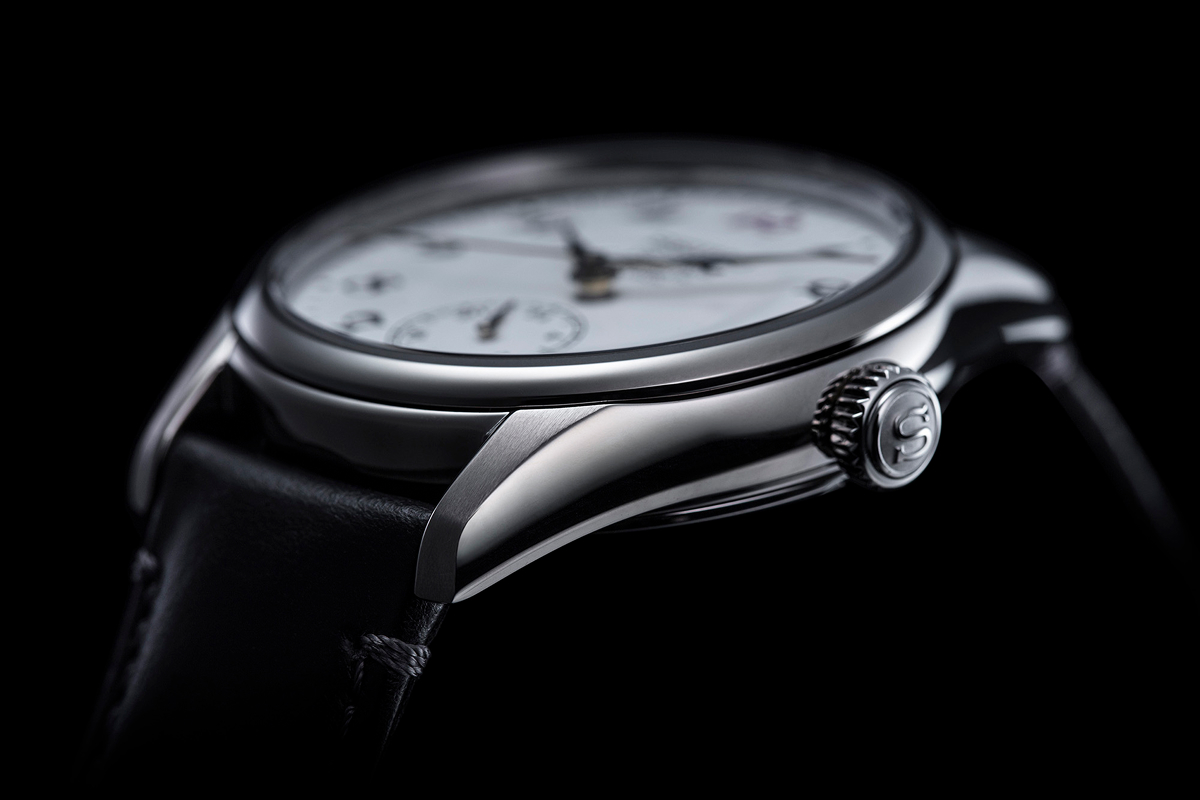
The sophisticated case design features elegantly flowing lines. The dial itself commands attention as the centerpiece of the design, with the case flowing seamlessly into the lugs to complete a graceful, curving form that naturally settles on the wrist.
Another feature of the overall design of the new models is the seamless integration of the lugs and the case, a fusion that accentuates the beauty of the dial design—the centerpiece of the product. Both new models aim for proportions that live up to the handsome bearing of the Laurel’s original design. Furthermore, the bezel is narrow and tight to make the dial appear wider, the crystal atop the dial utilizes a gentle curve, and the surrounding metal portion of the case is thin for a wide dial opening—all of which result in a light, elegant appearance
Seiko Presage HCC006
Viewed head-on, the sleek, sharp aesthetic of the case design is obvious. The narrow bezel transitions seamlessly and gracefully to the lugs, giving the timepiece a satisfyingly tight, toned overall appearance.
Important Past Models Paying Homage to the Laurel
The Laurel, which was the starting point of Seiko wristwatches and a highly iconic model in its own right, became an established brand within Seiko's wide-ranging offerings, seeing its production continue into the post–World War II era. Over the years, Seiko has released several Laurel-inspired enameled-dial models, including the Laurel SV925 in 1995 and the Laurel 4S28-0040 in 2000.
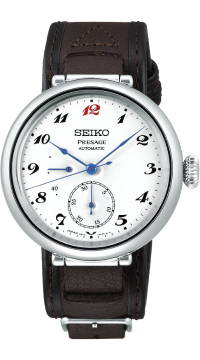
Seiko Presage SPB359
Automatic winding (Cal. 6R5H), 29 jewels, 28,800 VPH, approximately 45 hours power reserve, stainless steel case (37.5mm diameter, 12.6mm thickness), 5 atm water resistance. No longer available for purchase.
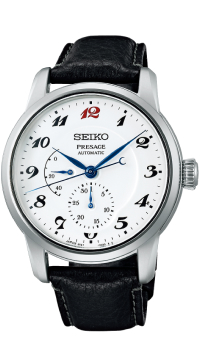
Seiko Presage SPB401
Automatic winding (Cal. 6R5H), 29 jewels, 28,800 VPH, approximately 45 hours power reserve, stainless steel case (40.2 mm diameter, 12.8 mm thickness), 10 atm water resistance. No longer available for purchase.
Alternative Design Roots Based on the "Timekeeper" Pocket Watch
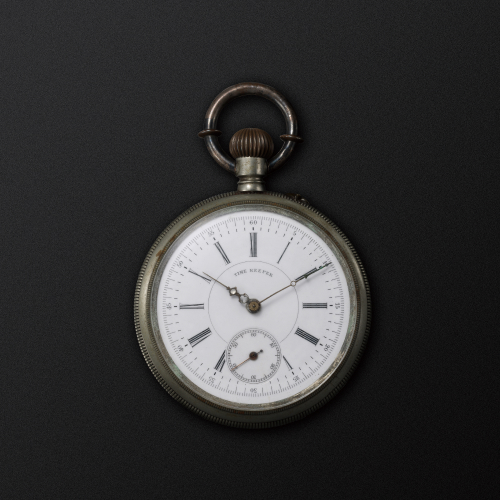
The "Timekeeper," Seiko's first-ever pocket watch, inspired the creative design of models preceding the HCC005 enamel-dialed model and HCC006 lacquer-dialed model.